Efficient wastewater treatment begins with maintaining a consistent flow of sewage into the treatment system. However, in residential societies, commercial buildings, hotels, hospitals, and industries, the volume and characteristics of wastewater fluctuate throughout the day. These variations can reduce the efficiency of a Sewage Treatment Plant (STP) if not properly managed. This is where the equalization tank in STP plays a crucial role.
An equalization tank acts as a balancing unit that collects wastewater from different sources and stores it temporarily before it moves to the next treatment stage. By regulating flow and maintaining a uniform wastewater load, it helps the entire treatment process operate more efficiently and reliably.
In this blog, we’ll explain what an equalization tank is, how it works, its major functions, benefits, and why it is considered one of the most important components of a modern sewage treatment system.
What is an Equalization Tank in STP?
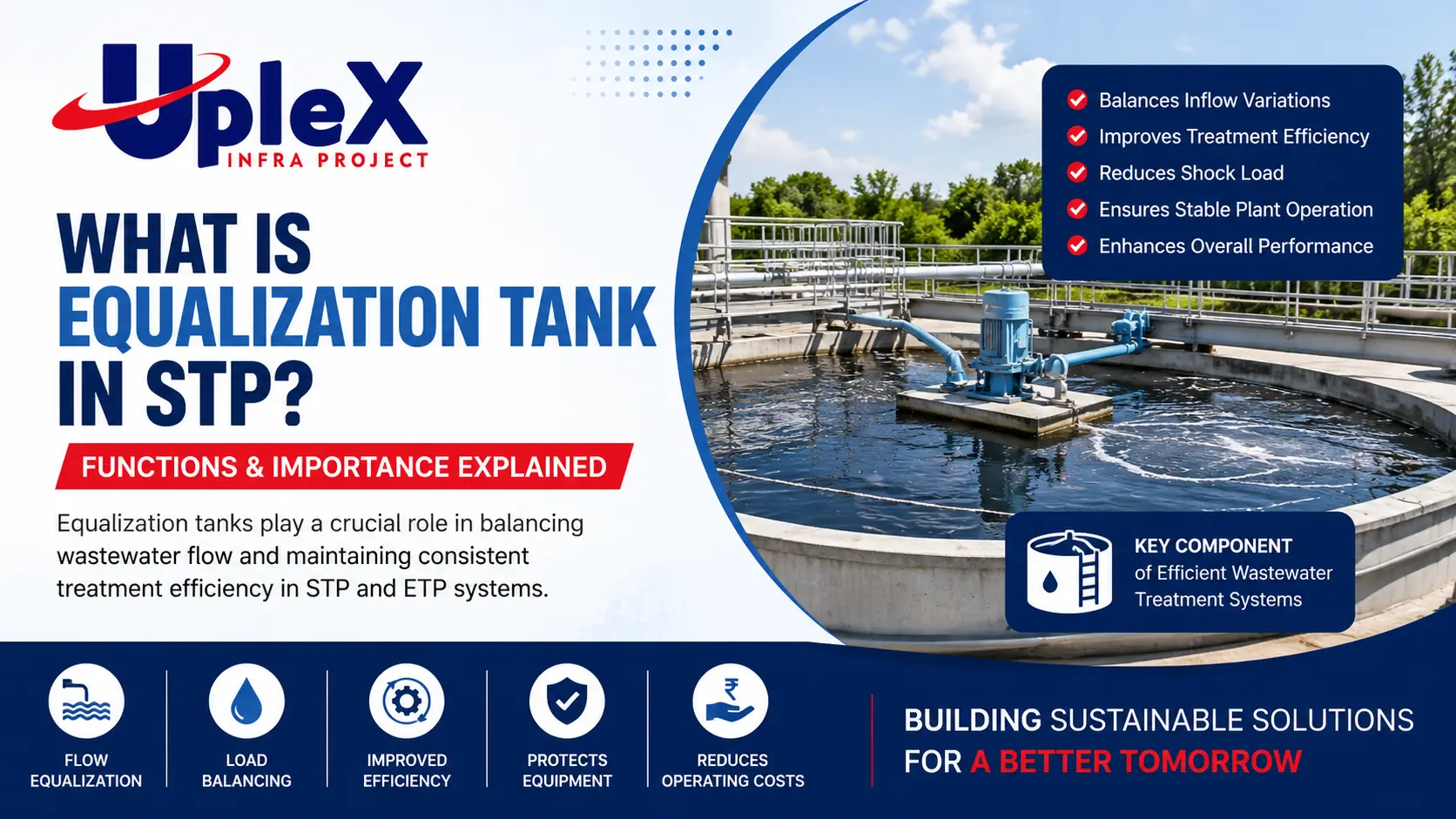
An equalization tank in STP is a specially designed storage tank that temporarily holds incoming sewage before it enters the biological or secondary treatment process. Instead of allowing wastewater to flow directly into the treatment units at varying rates, the tank equalizes both the flow and pollutant concentration.
For example, residential apartments usually generate peak wastewater during the morning and evening, while hotels and hospitals experience different flow patterns throughout the day. Without an equalization tank, these sudden variations can overload the treatment units, reducing overall plant efficiency.
Also Read: Rainwater Storage Tanks: Types, Benefits and Applications
The equalization tank collects wastewater during peak hours and releases it at a controlled and consistent flow rate. This creates stable operating conditions for the treatment plant and improves the performance of downstream equipment.
Why is an Equalization Tank Important?
Wastewater generated from homes, industries, commercial buildings, and institutions rarely has a constant flow or consistent quality. The quantity of sewage can increase rapidly during peak hours and reduce significantly during off-peak periods. Similarly, pollutant concentrations such as BOD, COD, suspended solids, and pH levels may fluctuate throughout the day.
Without proper equalization, these sudden changes can affect biological treatment processes, increase operational costs, and reduce treatment efficiency.
An equalization tank helps overcome these challenges by providing a balanced and continuous supply of wastewater, ensuring that every treatment unit performs at its optimum level.
Functions of an Equalization Tank in Sewage Treatment Plant
The equalization tank in sewage treatment plant performs several important functions that contribute to the smooth operation of the entire wastewater treatment process.
1. Balances Wastewater Flow
One of the primary functions of an equalization tank is to maintain a uniform flow of wastewater. It stores excess sewage during peak inflow periods and gradually releases it during low-flow periods.
2. Reduces Shock Loads
Sudden increases in wastewater volume or pollutant concentration can negatively impact biological treatment systems. Equalization tanks minimize these shock loads, protecting microorganisms and maintaining stable treatment performance.
3. Maintains Consistent Wastewater Quality
Wastewater characteristics change throughout the day. Mixing wastewater inside the equalization tank creates a more uniform composition, making subsequent treatment processes more effective.
4. Improves Biological Treatment Efficiency
Biological treatment units perform best when they receive wastewater at a consistent flow and pollutant concentration. Equalization tanks create ideal operating conditions for microorganisms responsible for breaking down organic matter.
5. Prevents Equipment Overloading
Pumps, aeration systems, clarifiers, and filtration units are designed to operate within specific capacities. Flow equalization helps prevent equipment overload, extending the lifespan of mechanical components.
6. Supports Continuous Plant Operation
A steady wastewater flow allows operators to maintain stable treatment conditions throughout the day, improving overall plant performance and reducing operational interruptions.
How Does an Equalization Tank Work?
Wastewater from different collection points first enters the equalization tank instead of flowing directly into the biological treatment process. Inside the tank, mixers or diffused aeration systems continuously agitate the wastewater to prevent solids from settling and to avoid foul odours.
The mixed wastewater is then pumped from the equalization tank at a controlled rate into the next stage of treatment. Since the inflow becomes uniform, downstream units receive a consistent hydraulic and organic load, resulting in higher treatment efficiency.
Equalization Tank in Wastewater Treatment
The importance of an equalization tank in wastewater treatment extends beyond sewage treatment plants. It is also widely used in industrial wastewater treatment facilities where wastewater characteristics can vary significantly depending on manufacturing processes.
Industries such as pharmaceuticals, food processing, textiles, chemicals, dairy, paper, and beverages generate wastewater with fluctuating pH, temperature, suspended solids, and organic load. An equalization tank helps stabilize these parameters before advanced treatment processes such as biological treatment, membrane filtration, or tertiary treatment.
By providing consistent wastewater characteristics, the equalization tank improves treatment efficiency and helps industries comply with environmental discharge standards.
Key Components of an Equalization Tank
A well-designed equalization tank generally includes several important components that ensure efficient operation.
- Reinforced concrete or fabricated storage tank
- Air diffusers or mechanical mixers
- Transfer pumps
- Level sensors and control panels
- Overflow arrangements
- Sludge removal system
- Flow control valves
- Ventilation system
Each component contributes to maintaining uniform wastewater conditions and ensuring uninterrupted plant performance.
Benefits of an Equalization Tank in STP
Installing an equalization tank offers several operational and environmental benefits.
- Maintains uniform wastewater flow.
- Improves biological treatment efficiency.
- Reduces shock loading on treatment units.
- Prevents pump and equipment overloading.
- Enhances overall treatment performance.
- Minimizes operational downtime.
- Reduces maintenance requirements.
- Improves water recycling efficiency.
- Extends the lifespan of treatment equipment.
- Helps achieve consistent treated water quality.
Applications of Equalization Tanks
Equalization tanks are widely used in different sectors where wastewater generation varies throughout the day.
These include:
- Residential Apartments
- Commercial Complexes
- Hotels & Resorts
- Hospitals
- Educational Institutions
- Industrial Manufacturing Units
- Food Processing Plants
- Textile Industries
- Pharmaceutical Industries
- Shopping Malls
- Corporate Offices
- Municipal Sewage Treatment Plants
In all these applications, the equalization tank helps maintain stable treatment conditions and ensures efficient wastewater management.
Conclusion
An equalization tank is one of the most important components of any modern sewage treatment plant. It balances wastewater flow, reduces shock loads, improves biological treatment efficiency, and protects critical equipment from sudden fluctuations in sewage volume and quality. Whether installed in a residential STP or an industrial wastewater treatment facility, the equalization tank in STP plays a significant role in ensuring smooth, efficient, and cost-effective plant operation.
At Uplex Infra Project Pvt. Ltd., we provide reliable and customized water and wastewater management solutions designed to meet the needs of residential, commercial, and industrial projects. If you’re planning a new Sewage Treatment Plant or upgrading an existing system, our experts can help you select the right solution for efficient and sustainable wastewater treatment.