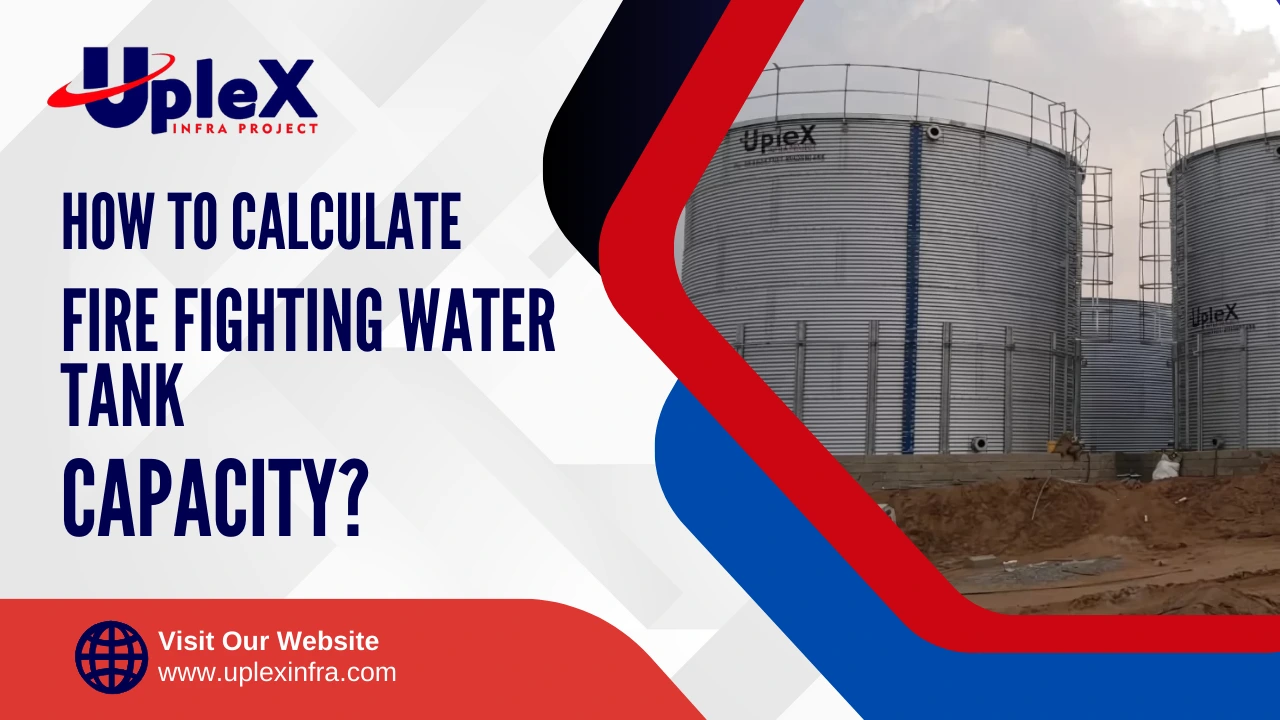
Fire protection is one of the most critical aspects of any commercial, industrial, residential, or institutional building. A properly designed fire fighting water tank ensures that sufficient water is available whenever a fire emergency occurs. However, one of the most common questions asked by engineers, builders, factory owners, and facility managers is “How to calculate fire fighting water tank capacity?”
The answer depends on several factors, including the building type, occupancy, fire risk, local regulations, sprinkler systems, and hydrant requirements. Selecting the correct tank size not only improves safety but also ensures compliance with fire protection standards while avoiding unnecessary investment.
In this guide, we’ll explain the factors that influence fire water tank capacity, the calculation process, and how to choose the right storage solution for your project.
Why is Fire Fighting Water Tank Capacity Important?
A fire fighting water tank acts as a dedicated water source for hydrant systems, sprinklers, hose reels, and fire pumps during emergencies. If the storage capacity is too small, there may not be enough water to control a fire. Conversely, an oversized tank can increase project costs unnecessarily.
A correctly designed tank provides:
- Continuous water supply during emergencies
- Reliable operation of fire hydrants and sprinkler systems
- Compliance with fire safety regulations
- Protection of lives and property
- Improved emergency preparedness
What is a Fire Fighting Water Tank?
A fire fighting water tank is a specially designed storage tank that stores water exclusively for firefighting purposes. Unlike domestic water tanks, it remains reserved for emergency situations and is connected to fire pumps, hydrants, and sprinkler systems.
Modern fire water tanks are commonly manufactured using galvanized steel, Zincalume steel, bolted steel panels, or glass-fused-to-steel technology due to their durability, corrosion resistance, and long service life.
These tanks are widely used in:
- Industrial plants
- Warehouses
- Shopping malls
- Hospitals
- Hotels
- Airports
- Residential townships
- Educational institutions
- Commercial buildings
Also Read: What is Fire Water Tank? Design, Capacity & Requirements in India
Factors That Affect Fire Fighting Water Tank Capacity
There is no single tank size suitable for every project. Capacity depends on several important factors.
1. Building Type
Different buildings require different fire protection systems. For example, a warehouse storing combustible materials requires a larger fire water reserve than a residential apartment.
2. Fire Risk Category
The higher the fire risk, the greater the water storage requirement. Manufacturing plants, chemical industries, oil depots, and logistics facilities generally require larger tanks than office buildings.
3. Building Area
The total built-up area directly influences the required firefighting water demand. Larger facilities usually require more hydrants and sprinklers, increasing overall water storage capacity.
4. Fire Hydrant System
The number of hydrants and the expected operating duration determine how much water must be stored for emergency response.
5. Automatic Sprinkler System
Buildings equipped with sprinkler systems require additional water storage to ensure uninterrupted operation throughout the design duration.
6. Applicable Fire Safety Standards
Fire fighting water tank capacity should always comply with applicable local regulations and project-specific fire safety standards. A qualified fire protection consultant or engineer should determine the final capacity based on the relevant codes for your location and occupancy.
How to Calculate Fire Fighting Water Tank Capacity
The exact calculation depends on the fire protection system design prepared by qualified professionals. In general, the required storage is based on:
- Expected firefighting water demand
- Number of hydrants operating simultaneously
- Sprinkler system demand (if installed)
- Required operating duration
- Additional safety reserve
A simplified concept is:
Required Tank Capacity = Total Water Demand × Required Operating Time
For example, if the total firefighting demand is designed to operate for a specific duration, the tank should store enough water to sustain that demand throughout the emergency.
Note: Final calculations should always be verified by a fire protection engineer and comply with the applicable fire safety standards.
Typical Fire Fighting Water Tank Capacities
Although every project is unique, common storage capacities include:
| Building Type | Typical Tank Capacity* |
|---|---|
| Small Commercial Building | Project-specific |
| Residential Apartment | Project-specific |
| Warehouse | Project-specific |
| Manufacturing Plant | Project-specific |
| Shopping Mall | Project-specific |
| Hospital | Project-specific |
| Industrial Facility | Project-specific |
*The exact capacity depends on the fire risk assessment, building layout, fire protection systems, and applicable codes.
Choosing the Right Fire Fighting Water Tank
When selecting a fire water storage tank, consider the following:
Material Quality
Choose corrosion-resistant materials such as Zincalume steel or galvanized steel for long service life.
Structural Strength
The tank should withstand environmental conditions, water pressure, and long-term use.
Leak-Proof Construction
High-quality bolted or modular tanks provide reliable sealing and minimize maintenance.
Easy Installation
Prefabricated modular tanks allow faster installation compared to conventional RCC tanks.
Future Expansion
Choose a system that can be expanded if your facility grows in the future.
Benefits of Modern Fire Water Tanks
Modern fire fighting water tanks offer several advantages over conventional storage systems.
- Reliable emergency water supply
- Long service life
- Corrosion resistance
- Low maintenance
- Quick installation
- High structural strength
- Modular expansion options
- Suitable for industrial and commercial applications
- Hygienic water storage
- Cost-effective long-term solution
Applications of Fire Fighting Water Tanks
Fire water tanks are essential for many industries and infrastructure projects, including:
- Manufacturing plants
- Warehouses
- Industrial estates
- Shopping centres
- Airports
- Railway stations
- Hotels
- Hospitals
- Residential townships
- Educational campuses
- Government buildings
- Power plants
- Logistics parks
Why Choose Uplex Infra Project Pvt. Ltd.?
At Uplex Infra Project Pvt. Ltd., we manufacture premium-quality fire fighting water tanks designed to deliver reliable performance during emergency situations. Our tanks are manufactured using high-grade Zincalume steel and advanced engineering techniques to ensure superior durability, corrosion resistance, and long service life.
We provide customized water storage solutions suitable for industrial, commercial, institutional, and infrastructure projects. From design and manufacturing to installation and after-sales support, our experienced team delivers complete solutions tailored to your project requirements.
Whether you require a compact fire water storage system or a large-capacity industrial tank, we are committed to providing dependable, high-performance solutions that meet the highest quality standards.
Frequently Asked Questions
1. What is the purpose of a fire fighting water tank?
A fire fighting water tank stores dedicated water for hydrants, sprinklers, and fire pumps during emergencies.
2. How is fire fighting water tank capacity calculated?
The capacity is determined by the required firefighting water demand, operating duration, building occupancy, fire protection systems, and applicable fire safety standards.
3. Which material is best for a fire fighting water tank?
Galvanized steel and Zincalume steel are popular choices because they offer excellent durability, corrosion resistance, and long service life.
4. Can fire water tanks be customized?
Yes. Modern modular tanks are available in various sizes and can be customized according to project requirements.
5. Where are fire fighting water tanks used?
They are commonly used in factories, warehouses, hospitals, hotels, residential projects, airports, shopping malls, and industrial facilities.
Conclusion
Calculating the correct fire fighting water tank capacity is essential for ensuring effective fire protection and regulatory compliance. The ideal capacity depends on multiple factors, including the building type, fire risk, hydrant and sprinkler requirements, and applicable safety standards. Investing in a properly designed fire water tank not only enhances emergency preparedness but also protects lives, property, and business operations.
If you are looking for a trusted manufacturer of high-quality fire fighting water tanks, Uplex Infra Project Pvt. Ltd. offers customized, durable, and reliable storage solutions engineered to meet diverse industrial and commercial requirements.