Among other resources, water can be termed as one of the most fundamental for domestic, commercial, industrial, and municipal purposes. With the ever-growing expansion of cities and increase in populations, it becomes increasingly necessary to come up with ways of storing and distributing water effectively. The overhead water tank forms an integral part of this process.
Today, many organizations and government bodies prefer advanced storage solutions developed by a trusted Zincalume Overhead Tank Manufacturer because of their durability, corrosion resistance, and long service life. Whether it is a township, industrial plant, educational institution, or public utility project, a well-designed over head tank helps ensure efficient water management and uninterrupted supply.
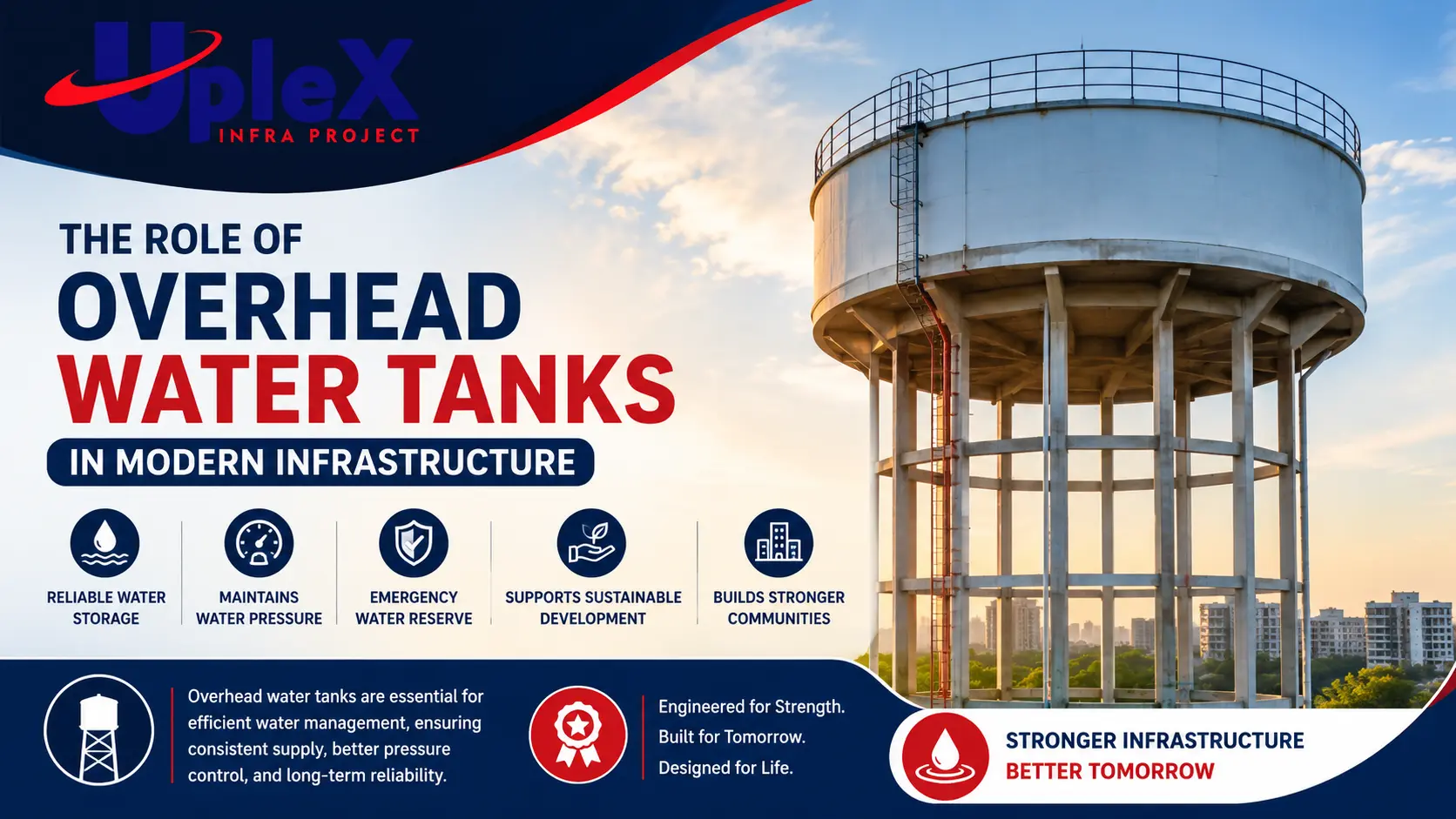
From residential societies and commercial complexes to industrial facilities and municipal water supply projects, an overhead water storage tank serves as an essential component of modern infrastructure. These elevated storage structures help maintain water pressure, store large volumes of water, and provide a reliable backup during emergencies or supply interruptions.
In this blog, we will explore the importance of overhead water tank systems, their benefits, applications, and the factors to consider when selecting the best overhead water tank for modern infrastructure projects.
What is an Overhead Water Tank?
An overhead water tank is a water storage structure installed at an elevated height above ground level. The primary purpose of the tank is to store water and distribute it through gravity to various consumption points without requiring continuous pumping.
Because the tank is positioned at a height, the natural force of gravity creates sufficient pressure for water distribution throughout buildings, industries, and municipal networks. Today, an over head water tank is considered a fundamental component of water supply systems in both urban and rural infrastructure projects.
Why Are Overhead Water Tanks Important?
Modern infrastructure depends heavily on uninterrupted access to water. Whether it is for drinking, sanitation, manufacturing, firefighting, or irrigation, water availability directly impacts daily operations.
An overhead tank serves several important purposes:
- Stores water during low-demand periods
- Supplies water during peak consumption hours
- Maintains consistent water pressure
- Provides emergency backup storage
- Reduces dependency on continuous pumping
Without proper water storage systems, many residential and industrial facilities would face frequent supply disruptions.
Also Read: What Is a Modular Water Storage Tank? Benefits, Applications, and Working Explained
How Does an Overhead Water Tank Work?
The working principle of an overhead water storage tank is simple yet highly effective. Water is pumped from a ground-level reservoir, borewell, municipal connection, or treatment facility into the elevated tank. Once stored, the water flows downward through pipelines due to gravity.
Because the tank is positioned above the point of use, water pressure is naturally generated without requiring constant mechanical assistance. This gravity-based distribution system offers several operational advantages, including energy savings and reduced maintenance costs.
The Role of Overhead Water Tanks in Modern Infrastructure
Ensuring Continuous Water Supply
One of the most important functions of an overhead water tank is ensuring uninterrupted water availability. During periods of high demand, stored water can be distributed efficiently without overloading the supply network. This helps maintain a reliable supply even when incoming water sources experience temporary disruptions.
Maintaining Water Pressure
In multi-story buildings and large facilities, maintaining adequate water pressure can be challenging. An elevated tank overhead system creates natural pressure that allows water to reach upper floors and distant distribution points without additional pumping systems.
Supporting Urban Development
Rapid urbanization has increased the demand for reliable water infrastructure. Modern residential townships, apartment complexes, hospitals, schools, shopping centers, and commercial buildings depend on overhead water storage systems to meet daily consumption requirements.
Emergency Water Storage
Unexpected situations such as power failures, pipeline damage, drought conditions, or maintenance work can interrupt water supply. An overhead water storage system provides a valuable reserve that helps facilities continue operating during emergencies.
Fire Protection Systems
Many commercial and industrial facilities use overhead tanks as part of their fire protection infrastructure. Stored water can be utilized for firefighting purposes when immediate access to water is critical.
Applications of Overhead Water Tanks
The versatility of overhead tanks makes them suitable for a wide range of applications.
- Residential Buildings- Apartment complexes and housing societies use overhead tanks to provide water to all floors while maintaining consistent pressure.
- Commercial Complexes- Office buildings, shopping malls, hotels, and business centers rely on overhead storage systems for daily water distribution.
- Industrial Facilities- Manufacturing plants often require large quantities of water for production, cooling, cleaning, and processing activities.
- Educational Institutions- Schools, colleges, and universities depend on overhead tanks to ensure uninterrupted water availability across campuses.
- Hospitals and Healthcare Facilities- Healthcare institutions require continuous water supply for sanitation, patient care, and medical operations.
- Municipal Water Supply Systems- Cities and towns use large-capacity overhead tanks to distribute water to entire communities.
Benefits of Installing an Overhead Water Tank
The growing popularity of overhead tanks is driven by the numerous benefits they offer.
- Reliable Water Availability- Water remains available even during temporary supply interruptions.
- Energy Efficiency- Gravity-based distribution reduces the need for continuous pumping.
- Consistent Water Pressure- Water can reach all parts of a building or facility effectively.
- Reduced Operational Costs- Lower energy consumption helps reduce utility expenses.
- Emergency Preparedness- Stored water acts as a backup during unforeseen situations.
- Improved Infrastructure Performance- A properly designed overhead tank enhances the efficiency of the overall water distribution system.
How to Choose the Best Overhead Water Tank
Selecting the best overhead water tank requires careful evaluation of project requirements.
- Storage Capacity- The tank capacity should match expected daily water consumption and future demand growth.
- Structural Design- The design must withstand environmental loads, water pressure, and long-term operational conditions.
- Material Quality- High-quality construction materials improve durability and reduce maintenance requirements.
- Location and Height- Proper elevation is essential to generate adequate water pressure throughout the distribution network.
- Maintenance Accessibility- Easy access for inspection and cleaning helps maintain water quality and system reliability.
Choosing the best overhead tank involves balancing capacity, durability, safety, and operational efficiency.
Factors Affecting the Cost of Overhead Water Tank Projects
Many project developers are interested in understanding the cost of overhead water tank construction.
Several factors influence project costs, including:
- Tank capacity
- Structural height
- Design complexity
- Construction materials
- Foundation requirements
- Site conditions
- Local labor costs
- Safety standards
Because every project has unique specifications, the overhead tank price may vary significantly depending on the application and location. Large municipal tanks typically involve higher investments than residential or commercial installations due to their scale and engineering requirements.
Future of Overhead Water Storage Systems
As urban infrastructure continues to evolve, modern water storage solutions are becoming more advanced.
Emerging trends include:
- Smart water monitoring systems
- Automated level control technologies
- IoT-based water management
- Sustainable construction practices
- Enhanced structural designs
These innovations are helping improve the efficiency, reliability, and lifespan of overhead water storage systems.
Conclusion
The overhead water tank remains one of the most important components of modern infrastructure. Whether serving residential communities, commercial facilities, industrial plants, or municipal water networks, these elevated storage structures ensure reliable water availability, maintain pressure, and support efficient distribution systems.
Investing in the best overhead water tank can significantly improve water management performance while reducing operational challenges. Although the cost of overhead water tank projects varies depending on size and specifications, the long-term benefits far outweigh the initial investment. As infrastructure development continues to grow, the role of the overhead water storage tank in supporting sustainable and efficient water supply systems will become even more critical in the years ahead.