Water is one of the most essential resources for daily life, agriculture, industries, and infrastructure development. However, growing water scarcity and declining groundwater levels have made water conservation more important than ever. One of the most effective solutions is storing rainwater for future use through efficient rainwater storage tanks and modern rain harvesting systems.
Rainwater harvesting not only helps conserve water but also reduces dependence on municipal supplies and groundwater sources. Whether for residential, commercial, agricultural, or industrial use, investing in proper rain water storage infrastructure can provide long-term environmental and economic benefits. We will explore the different types of rainwater storage tanks, their benefits, and their applications across various sectors.
What Are Rainwater Storage Tanks?
Rainwater storage tanks are specially designed tanks used to collect and store rainwater from rooftops, open surfaces, or other catchment areas. The collected water can then be used for irrigation, cleaning, industrial processes, firefighting reserves, and other non-potable applications.
A complete rainwater harvesting setup typically includes a collection area, gutters, pipes, filters, and storage tanks. These rain harvesting systems ensure that valuable rainwater is not wasted and can be utilized whenever required. As water conservation becomes a priority worldwide, the demand for reliable rain storage tanks continues to grow across residential and industrial sectors.
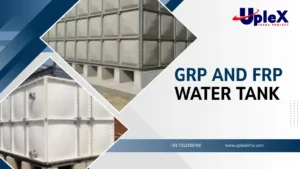
Also Read: What is the Difference Between GRP and FRP Water Tanks?
Why is Rain Water Storage Important?
Every year, millions of liters of rainwater flow away unused. Proper rain water storage helps capture this natural resource and store it for future use.
The importance of rainwater storage includes:
- Reducing pressure on groundwater resources
- Lowering water bills
- Improving water availability during shortages
- Supporting sustainable infrastructure development
- Minimizing stormwater runoff
- Promoting environmental conservation
For industries and commercial facilities, stored rainwater can significantly reduce dependence on external water sources and improve overall water management.
How Rain Harvesting Systems Work
Modern rain harvesting systems are designed to collect, filter, store, and distribute rainwater efficiently.
The process generally includes:
- Rainwater Collection- Rainwater is collected from rooftops or other catchment surfaces through gutters and pipelines.
- Filtration- The collected water passes through filtration units to remove leaves, dust, debris, and other contaminants.
- Storage- Filtered water is stored in specially designed rainwater storage tanks for future use.
- Distribution- Stored water can be supplied for irrigation, cleaning, industrial applications, landscaping, or groundwater recharge. A well-designed system ensures maximum collection efficiency and long-term water availability.
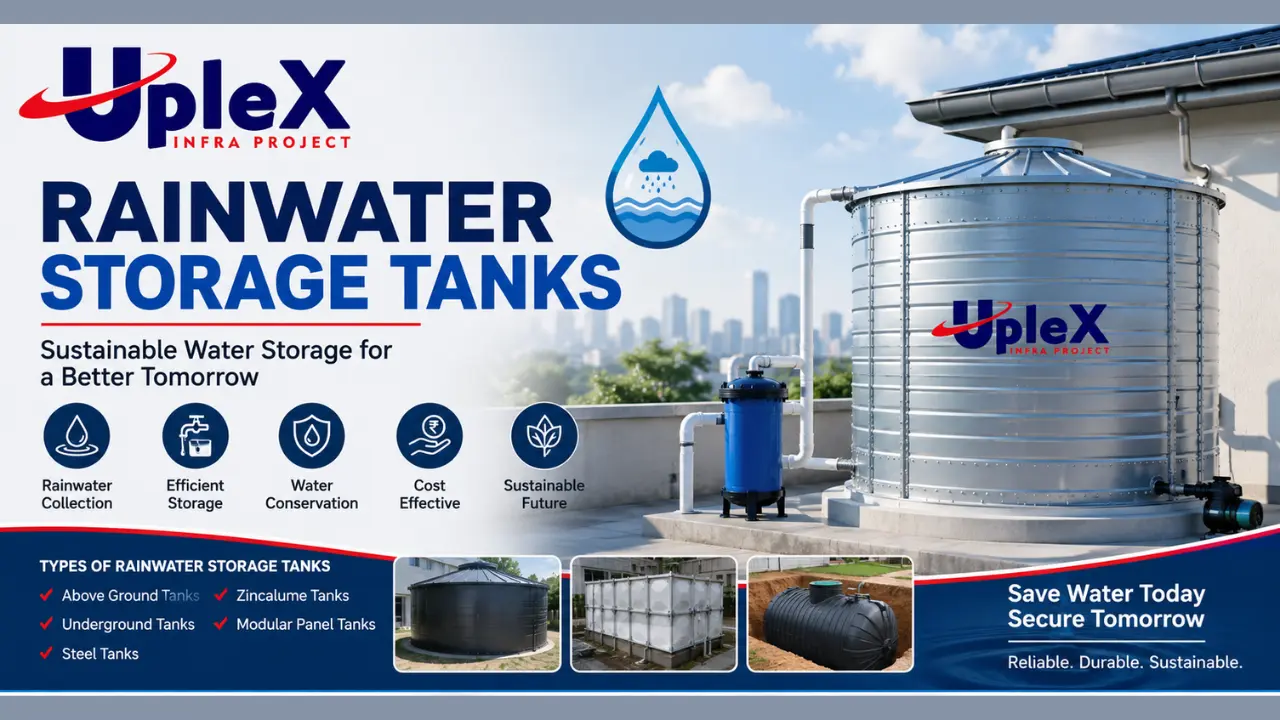
Types of Rainwater Storage Tanks
Different types of rainwater storage water harvesting tanks are available depending on storage requirements, installation conditions, and intended use.
1. Above-Ground Rainwater Storage Tanks
These tanks are installed on the ground surface and are commonly used in residential and commercial buildings.
Benefits include:
- Easy installation
- Simple maintenance
- Cost-effective solution
- Quick access for inspection
2. Underground Rainwater Storage Tanks
Underground tanks are installed below the surface and are ideal for locations with limited space.
Advantages include:
- Space-saving design
- Protection from sunlight and temperature fluctuations
- Enhanced aesthetics
- Large storage capacity
3. Steel Rainwater Storage Tanks
Steel tanks are highly durable and suitable for large-scale water storage requirements.
They offer:
- Long service life
- Structural strength
- Corrosion-resistant coatings
- High storage capacities
4. Zincalume Rainwater Storage Tanks
Zincalume tanks are becoming increasingly popular due to their durability and corrosion resistance.
These tanks are widely used in:
- Industries
- Commercial complexes
- Agricultural projects
- Infrastructure developments
5. Modular Water Storage Tanks
Modular tanks are assembled using prefabricated panels and can be customized according to project requirements.
They provide:
- Flexible design
- Easy expansion
- Fast installation
- Efficient space utilization
Benefits of Rainwater Storage Tanks
Installing rain harvesting tanks offers numerous benefits for individuals, businesses, and industries.
- Water Conservation- Rainwater harvesting reduces the demand for freshwater resources and promotes sustainable water usage.
- Reduced Water Costs- Stored rainwater can be used for various applications, reducing reliance on expensive municipal water supplies.
- Groundwater Protection- Effective rain water storage tanks help reduce excessive groundwater extraction and support natural recharge.
- Flood Mitigation- By capturing rainwater, storage systems reduce surface runoff and minimize urban flooding during heavy rainfall.
- Emergency Water Availability- Stored water serves as a backup source during water shortages, supply interruptions, or drought conditions.
- Environmental Sustainability- Using rainwater storage water harvesting tanks contributes to responsible water management and environmental protection.
Applications of Rainwater Storage Tanks
Today, rainwater storage tanks are widely used across different sectors due to their versatility and efficiency.
Residential Buildings
Homeowners use harvested rainwater for:
- Gardening
- Vehicle washing
- Cleaning
- Toilet flushing
- Landscape maintenance
- Commercial Buildings
Shopping malls, hotels, office complexes, and educational institutions utilize rainwater storage systems to reduce water consumption and operating costs.
Industrial Facilities
Industries require large quantities of water for processing, cooling, cleaning, and utility purposes. Properly designed rain harvesting systems provide a sustainable supplementary water source.
Agriculture
Farmers use stored rainwater for irrigation, livestock care, and crop management, particularly in areas facing seasonal water shortages.
Fire Protection Systems
Many commercial and industrial facilities use rain storage tanks as dedicated fire water reserves, ensuring a reliable supply during emergencies.
Infrastructure Projects
Large infrastructure developments increasingly incorporate rainwater harvesting systems to support sustainable construction practices and environmental compliance.
Choosing the Right Rainwater Storage Tank
Uplex Infra Project Pvt. Ltd. provides various types of rain water tanks that can be chosen depending upon individual project needs. Some of the water tanks offered by us include Zincalume Water Tanks, which are modular tanks as well as large water tanks suitable for rain water storage. At Uplex Infra, we assist our customers in choosing the best rain water tanks.
Why Invest in Modern Rain Harvesting Tanks?
As water scarcity becomes a growing concern worldwide, investing in high-quality rain harvesting tanks is a smart long-term decision. Modern tanks are designed to provide durability, efficient storage, and minimal maintenance while supporting sustainable water management goals.
Organizations, industries, and property owners are increasingly adopting rainwater harvesting solutions to improve water security and reduce operational costs.
Conclusion
Rainwater Storage Tanks play a crucial role in sustainable water conservation and resource management. Whether used in homes, industries, commercial buildings, or infrastructure projects, these systems help capture and store valuable rainwater that would otherwise go to waste.
With advanced rain harvesting systems, durable rain storage tanks, and properly designed rainwater storage water harvesting tanks, organizations can ensure reliable water availability while contributing to environmental sustainability. As the demand for water continues to rise, investing in efficient rainwater storage solutions is becoming an essential step toward a more sustainable future.